
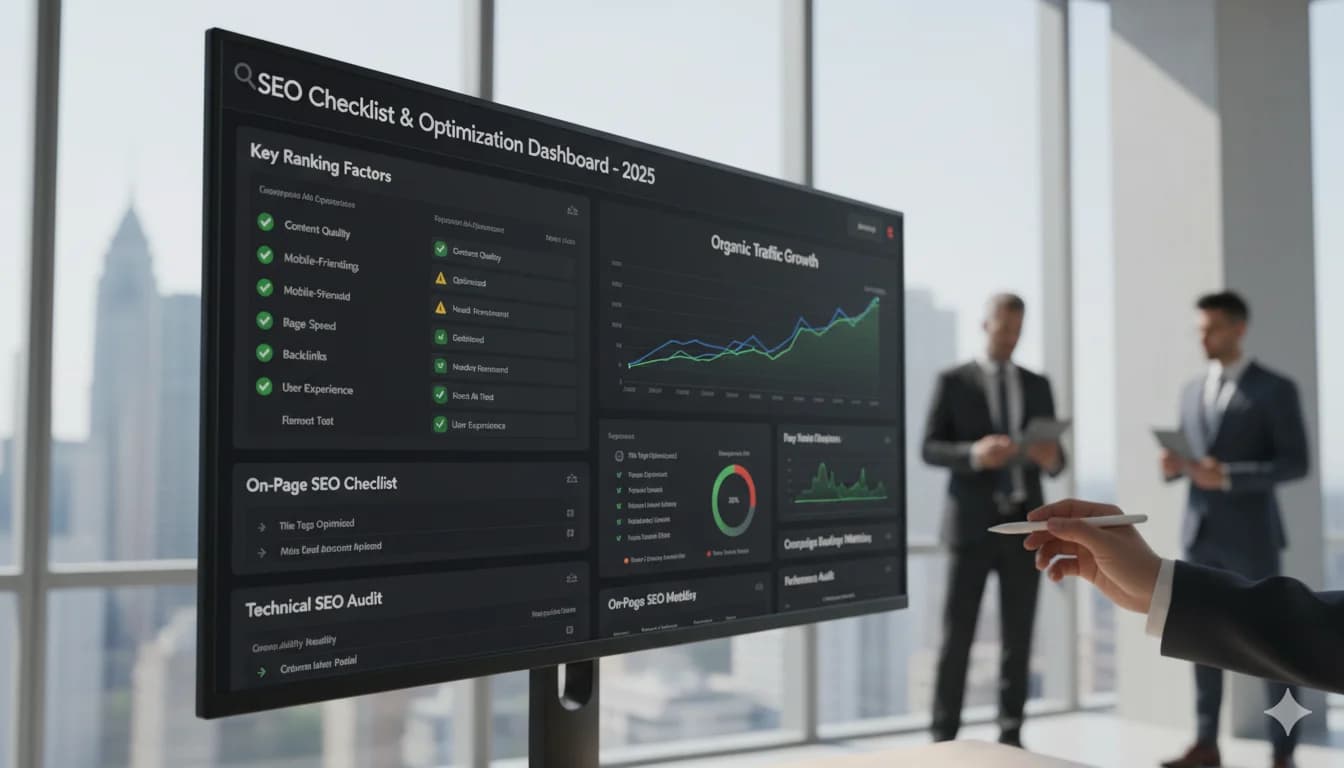
Why You Need an SEO Checklist in 2026
The SEO landscape is becoming increasingly complex. With a huge number of ranking signals, constant algorithm updates and AI answers right in the search results, it's hard to keep track.
This checklist gives you a structured overview of all important SEO aspects for 2026, from the technical foundation to content strategy.
1. Technical SEO Basics
Website Speed
Optimize Core Web Vitals:
- LCP (Largest Contentful Paint) < 2.5 seconds
- INP (Interaction to Next Paint) ≤ 200 milliseconds (replaced FID in March 2024)
- CLS (Cumulative Layout Shift) < 0.1
Performance Optimization:
- Compress images and use WebP format
- Lazy loading for below-the-fold content
- Minify CSS and JavaScript
- Use CDN for static assets
- Enable browser caching
Mobile-First Indexing
- Test responsive design on all devices
- Check mobile display with Lighthouse (the Mobile Usability report in Search Console was retired at the end of 2023)
- Touch elements at least 48x48 pixels
- Text readable without zoom (minimum 16px)
- No plugins that block mobile
Crawlability & Indexing
- robots.txt correctly configured
- XML sitemap created and submitted
- Important pages on "index, follow"
- Canonical tags properly set
- No redirect chains (max. 1 redirect)
- 404 pages for non-existent URLs
- Structured data (Schema.org) implemented
2. On-Page SEO
Title Tags
- Unique for each page
- 50-60 characters long
- Main keyword at the beginning
- Brand name at the end (optional)
- Clickable, compelling formulation
Meta Descriptions
- 150-160 characters per page
- Include call-to-action
- Address search intent
- Unique (no duplicates)
Heading Structure
- Only one H1 per page
- H1 contains main keyword
- Logical H2-H6 hierarchy
- Keywords in subheadings
- Scannable for readers
URL Structure
- Speaking URLs (e.g.,
/seo-checklist-2025) - No special characters or umlauts
- Short and concise
- Keywords in the URL
- HTTPS enabled
Content Optimization
Keyword Research:
- Main keyword identified
- Semantic keywords researched
- Long-tail keywords found
- Search intent analyzed
- Keyword difficulty assessed
Content Quality:
- Length driven by topic and search intent, not word count (Google says it has no preferred word count)
- Unique and valuable
- Answers user questions completely
- Current and relevant information
- Easy to read (Flesch Reading Score > 60)
Content Structure:
- Introduction with main topic
- Paragraphs max. 3-4 sentences
- Bullet points and lists
- Images and videos embedded
- Internal links to relevant pages
Image SEO
- Alt text for all images
- Descriptive filenames
- Compressed file size
- Responsive images (srcset)
- Use WebP format
3. Content Strategy
Content Types
- Blog articles for informational intent
- Landing pages for commercial intent
- Service/product pages for transactional intent
- FAQ pages for questions
- Case studies for trust
Content Planning
- Editorial calendar created
- Keyword clusters defined
- Content gaps identified
- Competitors analyzed
- Pillar content planned
Content Maintenance
- Update old articles (min. 1x per year)
- Remove outdated information
- Integrate new keywords
- Fix broken links
- Improve performance of weak pages
4. Link Building
Internal Linking
- Important pages well linked
- Anchor texts descriptive
- No orphan pages
- Logical page structure
- Breadcrumb navigation
External Links
- Backlink profile analyzed
- Disavow only if needed: Google says most sites don't need the tool; it's meant for lots of artificial links that caused, or will likely cause, a manual action
- Guest posting strategy
- Broken link building
- Digital PR for mentions
Link Quality
- Backlinks from relevant sites
- Reputation of the linking site checked (metrics like Domain Authority come from SEO tools such as Moz, not from Google, and are only a rough guide)
- Dofollow links prioritized
- Natural anchor text mix
- Continuous link building
5. Local SEO (for local businesses)
Google Business Profile
- Completely filled out
- Correct NAP data (name, address, phone)
- Categories optimally chosen
- High-quality photos uploaded
- Regular posts published
- Reviews collected and responded to
Local Citations
- Entries in relevant directories
- Consistent NAP data everywhere
- Industry-specific portals
- Local backlinks built
6. E-Commerce SEO (for online shops)
Product Pages
- Unique product descriptions
- Multiple high-quality product images
- Customer reviews integrated
- Structured data (Product Schema)
- FAQs about products
Category Pages
- Optimized category descriptions
- Faceted navigation SEO-friendly
- Canonical tags for filters
- Internal linking to products
Shopping Features
- Google Merchant Center set up
- Product feed optimized
- Google Shopping Ads activated
- Rich snippets for prices & availability
7. Monitoring & Analytics
Tracking Setup
- Google Analytics 4 set up
- Google Search Console connected
- Conversion tracking active
- Event tracking for important actions
- Custom dashboards created
Important Metrics
Monitor regularly:
- Organic traffic
- Keyword rankings
- Click-through rate (CTR)
- Bounce rate
- Average session duration
- Conversion rate
- Core Web Vitals
Reporting
- Monthly SEO reports
- ROI calculation
- Competitor monitoring
- Backlink monitoring
- Ranking tracking
8. Advanced SEO
Structured Data
- Schema.org markup implemented
- Organization Schema
- LocalBusiness Schema
- Article/BlogPosting Schema
- FAQ Schema no longer earns a rich result: Google has not shown FAQ rich results in Search since 7 May 2026 (before that, since 2023, only for well-known, authoritative government and health websites)
- Review Schema only where it fits, for example on products: if a business controls the reviews about itself (LocalBusiness/Organization on its own website), Google has not shown review stars for them since 2019
- Breadcrumb Schema
International SEO
- hreflang tags correctly set
- Correct URL structure (subdomain/subfolder)
- Localized content (not just translated)
- Separate sitemaps per language
Voice and AI Search
- Target conversational keywords
- Use FAQ format
- Aim for featured snippets
- Optimize local "near me" queries
- According to Google, AI Overviews and AI Mode have no additional requirements: the same SEO fundamentals as above apply, and Google Search does not need an llms.txt file
Conclusion: Your SEO Roadmap
SEO is not a sprint, but a marathon. Work through this checklist systematically:
Month 1-2: Technical SEO basics Month 3-4: On-page optimization Month 5-6: Content strategy Ongoing: Link building and monitoring
Prioritize quick wins (e.g., optimize title tags) over extensive projects (e.g., site relaunch).
Important context: I don't offer SEO as a standalone service; my focus is paid search with Google Ads. Ongoing content SEO and link building are best handled by a specialised SEO agency. If you run an SEO agency yourself and your clients ask for Google Ads, I can take that on behind the scenes through Google Ads white label, with no client contact. Only when I build your website as part of web development are technical SEO and GEO basics (schema markup, meta tags, Core Web Vitals) already included. If you want to be visible in search right away in parallel, Google Ads management is the right place to start.
About the Author: Mijo Jurisic is a Google Ads Manager and Consultant. He brings 5+ years of hands-on Google Ads experience, including 2023-24 as a Google Ads consultant on behalf of Google, responsible for direct Google Ads customers and top agencies in the DACH region. Mijo continues to support small to medium-sized businesses, enterprise clients, and agencies.