The Google Ads Landscape in 2026
Google Ads has changed dramatically over the past few years. With the introduction of AI-powered campaigns, Performance Max, and advanced automation options, advertisers face new challenges and opportunities.
In this comprehensive guide, I'll show you the most important best practices for 2026 that will take your Google Ads campaigns to the next level. Before that, it pays to look at three changes Google made in almost every account in 2026, even if you didn't touch anything yourself.
What Changed in 2026
AI Max Replaces Legacy Search Settings
According to Google, AI Max for Search campaigns has left beta (Google Ads & Commerce Blog, April 15, 2026, updated June 11, 2026). Since September 1, 2026, Google automatically upgrades Search campaigns to AI Max if they use automatically created assets and/or the campaign-level broad match setting. The upgrade applies to individual campaigns, not the whole account, and according to the Google Ads API team (August 12, 2026) it rolled out progressively throughout September. New campaigns with these legacy settings can no longer be created since August 3, 2026.
Which AI Max features are active afterwards depends on where the campaign started, according to the API team:
| Campaign starting point | Search term matching | Text customization | Final URL expansion |
|---|---|---|---|
| Automatically created assets | on | on | off |
| Campaign-level broad match | on | off | off |
Table scrolls sideways
Existing brand inclusions and exclusions are carried over into the new setup. Campaigns with Dynamic Search Ads are excluded from the September upgrade; their automatic upgrade follows from February 2027, according to Google. From my practice, it pays to take a close look at the search terms report for the first weeks after the upgrade: that is where you see whether search term matching brings queries you want to exclude. What exactly to check in your account is covered in my post AI Max: what changes in your account.
Enhanced Conversions: Several Data Sources, One Switch Announced
According to Google Ads Help, since April 2026 Google Ads accepts user-provided data from website tags, Data Manager and API connections at the same time. Google also plans to combine enhanced conversions for web and for leads into a single feature with an on/off switch. As of October 2026 the help page still describes this as coming soon, and anyone who has already accepted the customer data terms is to be moved over automatically. For offline uploads, the rule since June 15, 2026 is: according to the Google Ads API team, the Google Ads API no longer accepts new adopters of offline conversion imports, and new integrations go through the Data Manager API. The step-by-step setup is in my conversion tracking guide.
Consent Mode Controls What Flows From Analytics to Ads
Since June 15, 2026, according to Analytics Help, Google Analytics uses Consent Mode as the single control for how the Analytics tag collects and uses Google Ads cookies and IDs. The Google signals setting in Analytics now only controls the association with signed-in users for behavioral reporting. For you, this means a cleanly implemented Consent Mode v2 is not a formality: it helps decide which data from Analytics actually reaches Google Ads.
1. Using Performance Max Effectively
Performance Max (PMax) is no longer just an option. It has become the primary campaign type for many businesses. Here are the key success factors:
Building Asset Groups Strategically
- From my practice: several asset groups rather than one, often 5 or more with a broad offering
- Each group should target a specific product or service
- High-quality images, videos, and text variations are mandatory
Optimizing Audience Signals
Even though Performance Max is automated, give the algorithm the right direction:
- Create custom segments from keywords, URLs and apps that match your best customers
- Use first-party data from your CRM
- Test different audience signals and measure performance
Perfecting Conversion Tracking
Performance Max thrives on good conversion data:
- Turn on enhanced conversions for web and leads
- Track micro-conversions (e.g., "Add to Cart")
- Set conversion values for better optimization
2. Using AI and Automation Correctly
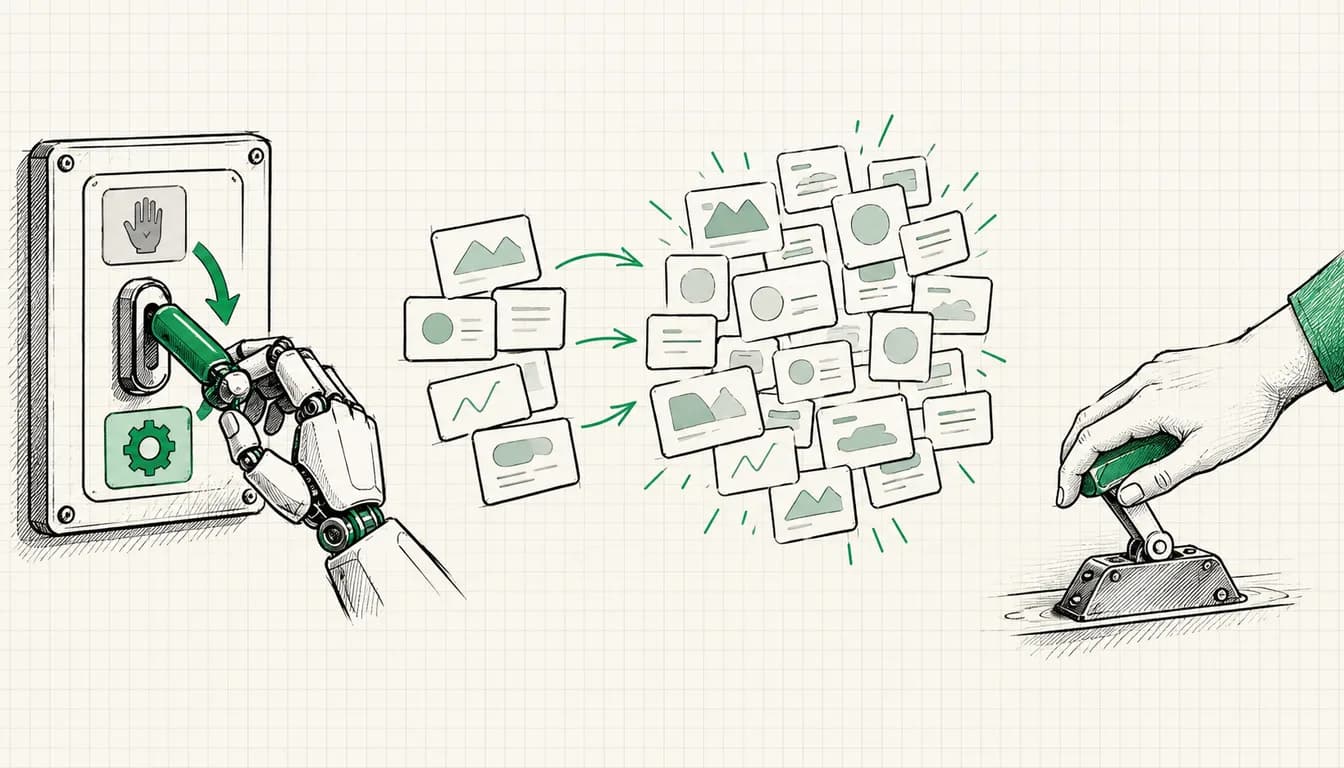
In 2026, AI shapes Google Ads more than ever, and with AI Overviews and AI search Google Search itself is changing too. But: Automation doesn't mean "set and forget."
Smart Bidding Strategies
The best bidding strategies for different goals:
- Maximize Conversions: Ideal for lead generation with flexible budget
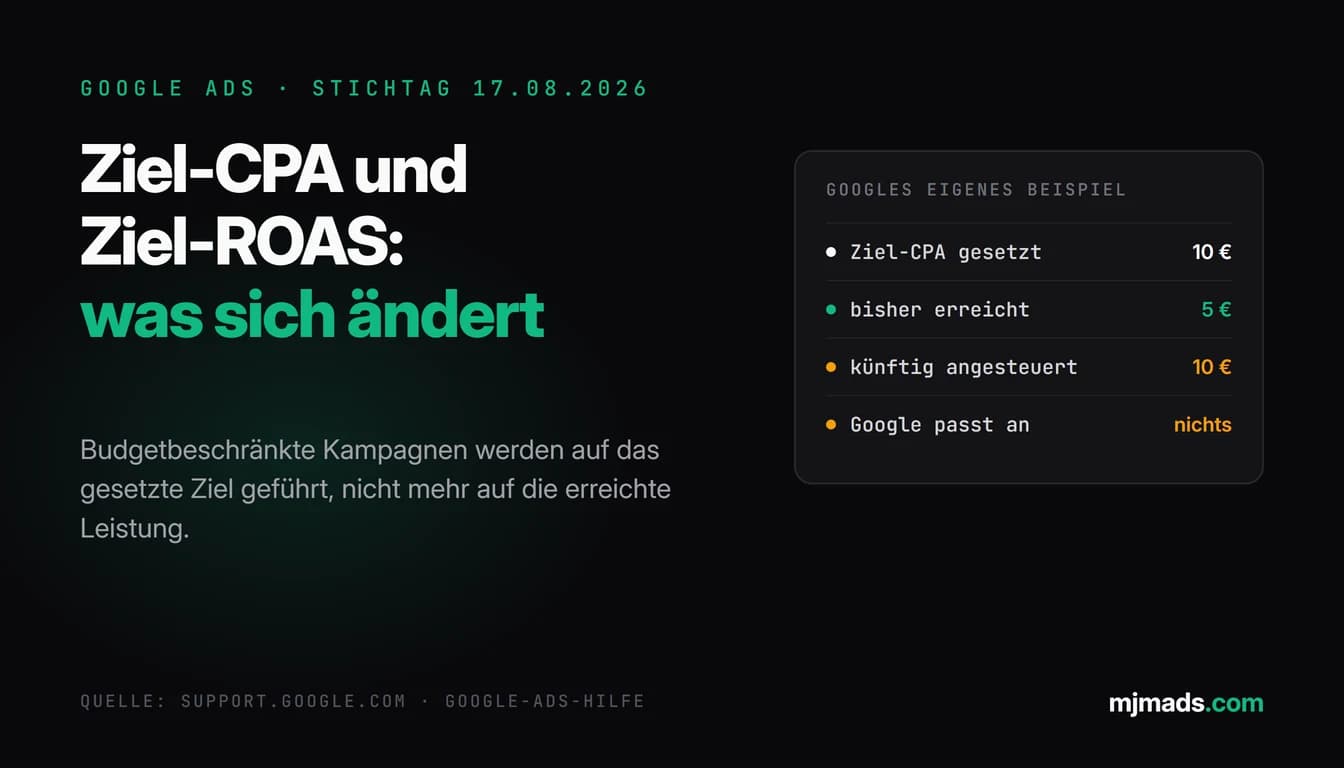
- Target ROAS: Perfect for e-commerce with clear revenue goals
- Target CPA: Good for services with defined acquisition costs
Important: Give the algorithm time. Per Google, you can start Target CPA without any conversion history, while Target ROAS in Search and Shopping campaigns needs at least 15 conversions in the past 30 days. In my experience, though, Smart Bidding only runs really steadily from around 30 conversions in 30 days.
Optimizing Responsive Search Ads
RSAs are the standard. Here are the secrets to success:
- At least 10-15 headlines with different approaches
- 3-4 descriptions with clear CTAs
- Only pin headlines that really need to be fixed (e.g., brand names)
- Use Dynamic Keyword Insertion strategically
3. Keyword Strategy 2026
Keywords aren't dead, but the strategy has changed.
Broad Match with Smart Bidding
The combination that works in 2026:
- Broad match keywords for maximum reach
- Smart bidding for efficiency
- Negative keywords for control
- AI Max for Search campaigns: according to Google, the setting combines search term matching, text customization (formerly automatically created assets) and final URL expansion. Google automatically upgraded campaigns with automatically created assets or campaign-level broad match in September 2026 (see above). Keyword-level broad match still exists. From my practice, switch on search term matching and final URL expansion deliberately only once conversion tracking and negative keywords are solid
Long-Tail Keywords for Niches
- Lower competition = lower CPCs
- Higher conversion rates through more specific intent
- Perfect for specialized services
Continuously Maintain Negative Keywords
- Weekly review of search terms report
- Build a master negative keyword list
- Negative keywords at campaign and account level
4. Landing Page Optimization
Your Google Ads are only as good as your landing pages.
The Perfect Landing Page 2026
Above the Fold Must-Haves:
- Clear headline with main benefit
- Compelling hero image or video
- Primary CTA prominently placed
- Trust elements visible
Performance Optimization:
- Optimize Core Web Vitals (< 2.5s LCP)
- Mobile-first design
- Continuous A/B testing
Conversion Rate Optimization
- Forms as short as possible
- Multi-step forms for complex products
- Exit-intent popups for re-engagement
- Live chat for immediate support
5. Budget Management and Scaling
Budget Allocation by Performance
Analyze weekly:
- Which campaigns deliver the best ROAS?
- Where are you losing impression share due to budget?
- Which times of day/days of week perform best?
Scaling Strategy
How to scale profitably:
- Start: 20% budget increase with good ROAS
- Monitor: Observe performance for 3-5 days
- Adjust: Repeat on success, roll back on decline
Rule of thumb from my practice: Don't increase by more than roughly 20% at once. Bigger jumps often throw the algorithm off.
6. Reporting and Analysis
The Most Important KPIs for 2026
Mandatory Metrics:
- ROAS (Return on Ad Spend)
- Conversion Rate
- CPA (Cost per Acquisition)
- Quality Score
- Impression Share
Advanced Metrics:
- Customer Lifetime Value (CLV)
- Time to Conversion
- Assisted Conversions
- Cross-Device Conversions
Attribution Models
My recommendation for 2026:
- Data-Driven Attribution as standard
- Last click is the only alternative left and is mainly useful as a point of comparison
- Position-based, time decay, linear and first click are no longer supported in Google Ads: conversion actions that used them were upgraded to data-driven attribution
7. Avoiding Common Mistakes
Top 5 Mistakes That Cost You Money
- Too little conversion data → Wait with automation
- Too many campaigns → Consolidate for better data
- Ignoring mobile → in my experience most traffic comes from smartphones, and the device report shows you the exact share
- No negative keywords → You're wasting budget
- Set and forget → Google Ads needs active management
Conclusion: Your Roadmap for 2026
Google Ads 2026 is a balance between automation and strategic control:
✅ Check what AI Max and the enhanced conversions change did to your account ✅ Use Performance Max and Smart Bidding ✅ Give the algorithm high-quality data, backed by a clean Consent Mode ✅ Continuously optimize landing pages ✅ Test, measure, optimize
Need support with your Google Ads strategy? I help you optimize your campaigns and get more out of your budget. Book a free intro call